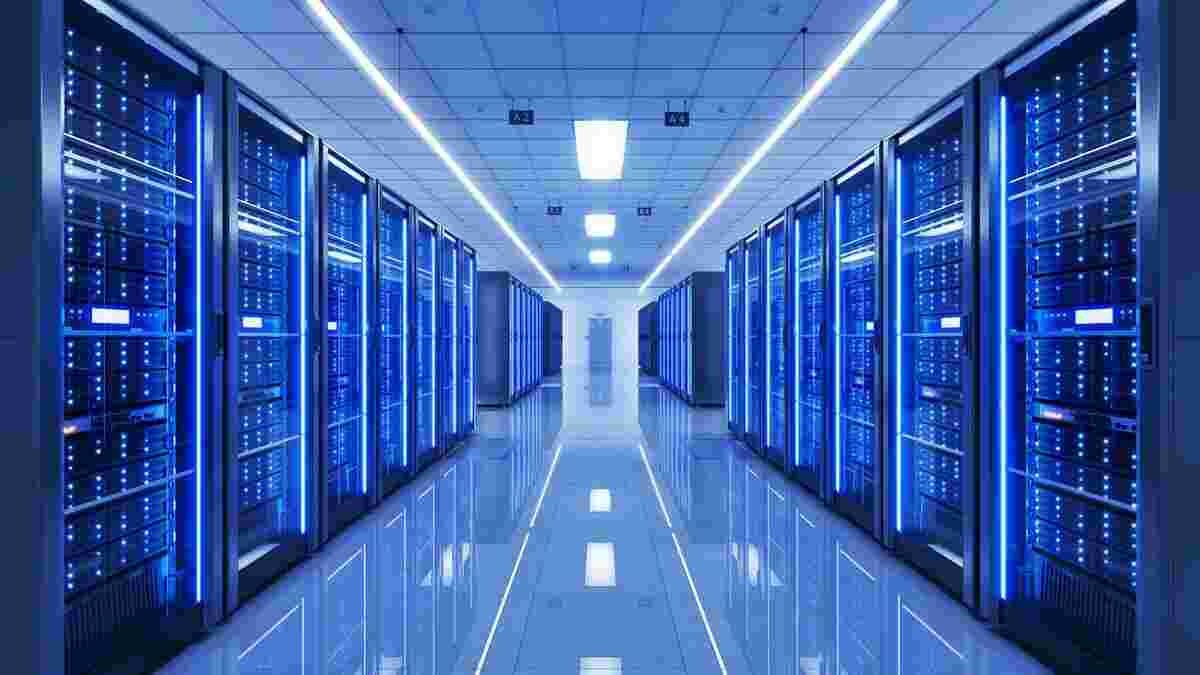
The world’s largest technology companies are borrowing at a blistering pace to fuel the artificial intelligence boom, collectively raising more than $120 billion in new debt this year alone to build massive data centers that power generative AI models. Meta, Amazon, Google, Microsoft, and Oracle now carry a combined debt load approaching half a trillion dollars, a sharp increase that has caught the attention of investors and raised fresh questions about the long-term sustainability of the AI infrastructure race.
These sprawling facilities, often the size of several football fields, consume enormous amounts of electricity and house thousands of specialized chips designed to train and run advanced AI systems. A single large-scale data center can cost between $10 billion and $20 billion to construct, with operating expenses running into hundreds of millions annually due to power and cooling demands. As demand for AI services explodes—from chatbots to image generators and enterprise tools—hyperscalers are racing to secure capacity years ahead of actual need.
Meta led the charge in early 2025, issuing $10.5 billion in bonds to fund an ambitious plan for 24 new AI-optimized campuses across North America and Europe. Amazon quickly followed with a $14 billion offering, earmarking proceeds for its AWS division to expand clusters in Virginia, Oregon, and emerging hubs in the Middle East. Google raised $12 billion in green bonds focused on renewable-powered facilities, while Microsoft tapped markets for $18 billion to support OpenAI’s growing compute requirements. Oracle rounded out the wave with a $9 billion issuance, targeting rapid deployment of smaller, distributed AI data centers for enterprise clients.
Wall Street has greeted the borrowing spree with cautious optimism. Bond yields remain attractive for these tech giants thanks to strong cash flows and investment-grade credit ratings. Interest rates on the new debt range from 4.2% to 5.1%, manageable given the revenue potential of AI services. Analysts project that enterprise spending on generative AI will surpass $200 billion annually by 2027, providing ample returns to service the debt. Meta’s chief financial officer noted during an earnings call that every dollar invested in AI infrastructure is already generating $3 in incremental revenue within 18 months.
Yet concerns are mounting over the sheer scale of capital expenditure. Energy consumption stands out as the biggest wildcard. A modern AI data center can draw 500 megawatts or more—enough to power a medium-sized city—prompting utilities to scramble for new power plants and transmission lines. In Virginia, home to the world’s largest concentration of data centers, regulators have approved emergency measures to keep coal plants online longer than planned. Similar strains are appearing in Ireland, Singapore, and parts of Texas, where blackouts have become more frequent during peak demand.
Environmental groups have criticized the rapid build-out, pointing out that even with renewable energy commitments, many facilities still rely on fossil fuels during construction and early operation phases. Water usage for cooling is another flashpoint; some campuses require millions of gallons daily, exacerbating shortages in drought-prone regions.
Investors are watching balance sheets closely. Moody’s recently placed several tech giants on review for possible downgrade if capital spending continues unchecked into 2026. Stock prices have remained resilient, buoyed by AI enthusiasm, but any slowdown in adoption could turn today’s debt into tomorrow’s burden. Smaller players like CoreWeave and Crusoe Energy have already faced funding challenges, relying on high-interest loans and equity dilution to stay competitive.
Inside the industry, executives insist the spending is disciplined. Google’s cloud chief described the investments as “once-in-a-generation infrastructure” comparable to the build-out of the internet itself. Microsoft’s Satya Nadella told shareholders that the company is prioritizing efficiency, with new chip designs cutting training times by up to 40% and reducing power needs per calculation.
For everyday users, the debt wave translates into faster, more capable AI tools. ChatGPT, Gemini, and Meta AI are improving weekly, while businesses gain access to custom models that boost productivity. Cloud pricing remains competitive, with AWS and Azure passing only a fraction of the infrastructure cost to customers.
The $120 billion debt surge marks a defining moment in technology history. Big Tech is betting its balance sheet on a future where AI permeates every industry, from healthcare to entertainment. If adoption continues at the current pace, today’s borrowing will look like a bargain. If growth falters, however, the industry could face a painful reckoning. For now, the race is on, and the winners will be those who build fastest—and smartest—in this new digital gold rush.