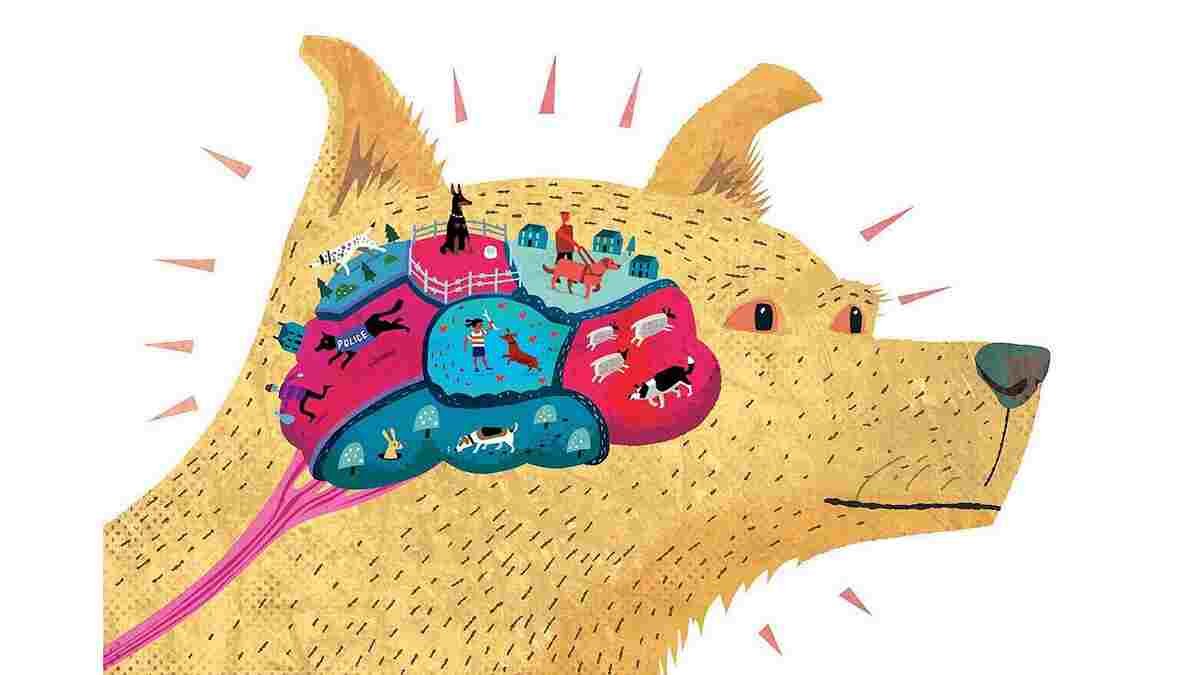
A groundbreaking international study published this month in Science has revealed that certain dogs possess a remarkable ability once thought unique to human children — they can learn new words simply by overhearing human conversations. This extraordinary finding not only reshapes our understanding of canine intelligence but also suggests that the cognitive foundations for language learning may extend beyond humans.
Scientists have long known that dogs are attuned to human cues. They can follow a pointing finger, respond to commands such as “sit” or “stay,” and even recognize common words like their own name or the sound of a treat bag opening. But until now, the idea that dogs could acquire new vocabulary without direct instruction had remained unproven. Recent research led by animal cognitive scientist Dr. Shany Dror of the University of Veterinary Medicine in Vienna has changed that perception.
The study specifically examined a rare class of canines known as Gifted Word Learner (GWL) dogs — individuals with extraordinary abilities to associate words with objects and successfully retrieve them on command. These gifted pups already know the names of dozens, or in some cases hundreds, of toys and objects. The question scientists wanted to answer was: Could these dogs learn new object names even when they weren’t being addressed directly?
To test this, researchers designed a two-phase experiment. In the first part, dog owners directly introduced new toys to their pets and repeatedly stated the toy names, a traditional learning method. In the second phase, owners and family members discussed and handled new toys in front of the dogs without directly addressing them. Both situations involved brief exposure — around eight minutes per new item — and were followed by a retrieval test. Remarkably, the dogs successfully fetched the correct toys by name in both conditions with similar accuracy.
What makes this discovery particularly compelling is not just that the dogs learned the words, but how they did it. In the “overheard” condition, the pups were never directly involved in the toy introductions; they simply listened as humans talked about the objects. Even without direct interaction, the dogs matched words to objects and retrieved them accurately — an ability previously documented mainly in human infants around 18 to 24 months old.
Dr. Dror and her colleagues contend that these skills arise from advanced social-cognitive abilities that enable the dogs to interpret human speech cues, rather than from simple conditioning. The dogs appear capable of extracting meaningful information from natural speech and using social signals like gaze and gesture to associate words with objects — much like toddlers.
In an interview, Dror explained that while most dogs can learn basic commands and simple associations, these gifted word learners demonstrate a depth of understanding that goes beyond typical canine training. “These dogs show us that the socio-cognitive mechanisms involved in language acquisition might not be as uniquely human as we once thought,” she said.
The study involved dogs from multiple countries, including border collies, Labrador retrievers, and border collie mixes — breeds already known for their intelligence and trainability. Some individual dogs in the research had vocabularies of hundreds of object names prior to testing, while others showed extraordinary learning speed and accuracy in the new experimental conditions.
While the ability to learn by eavesdropping is rare in dogs, scientists believe these findings may open new avenues in comparative cognition and animal communication research. By studying how dogs process information from overheard human speech, researchers hope to better understand not only canine intelligence but also the evolutionary roots of language learning in mammals.
Experts caution that the results do not mean all dogs can learn words this way. Most dogs are unlikely to spontaneously build large vocabularies without direct teaching methods. However, these gifted learner cases help illuminate the potential cognitive capacities that have likely evolved through long-term domestication and close human-dog relationships.
This research adds to a growing body of work showing that animal cognition is more complex than once believed. From parrots solving puzzles to dolphins understanding abstract concepts, the spectrum of intelligence in the animal kingdom continues to surprise scientists. But few discoveries have captured the public’s imagination quite like seeing dogs learn language in ways that mirror early human development.